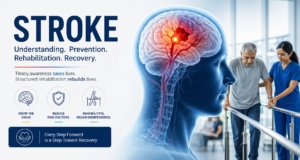
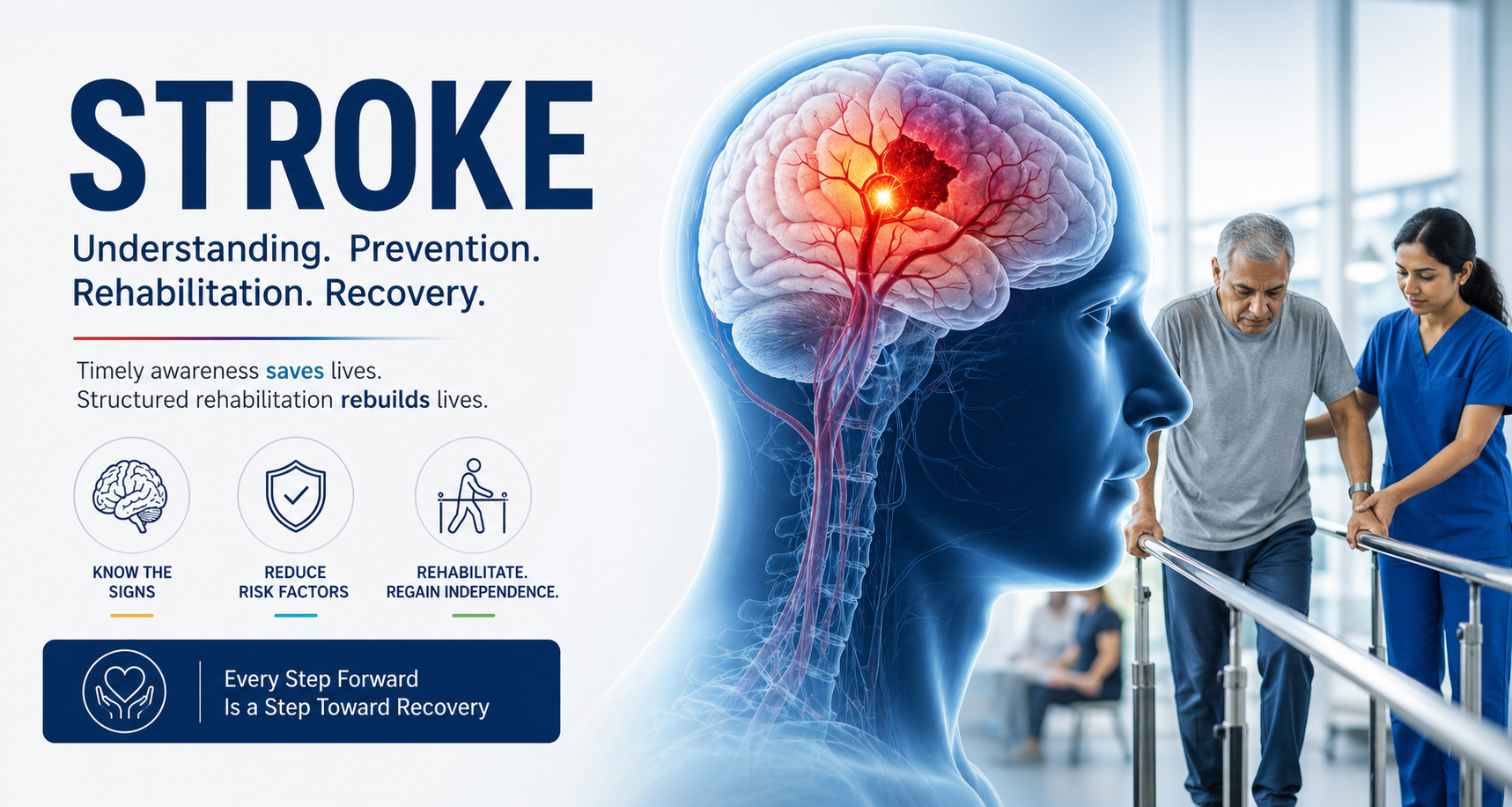
An evidence-based guide to stroke types, causes, and the rehabilitation needed for meaningful recovery.
Stroke is often described as a “sudden event.”
In reality, it is the result of processes that build silently over years — and recovery, if approached correctly, is anything but random.
At TheraSync Neuro, we see stroke not as a single episode, but as a turning point that requires structured, coordinated recovery.
What Exactly Is a Stroke?
A stroke occurs when the brain is deprived of oxygen-rich blood.
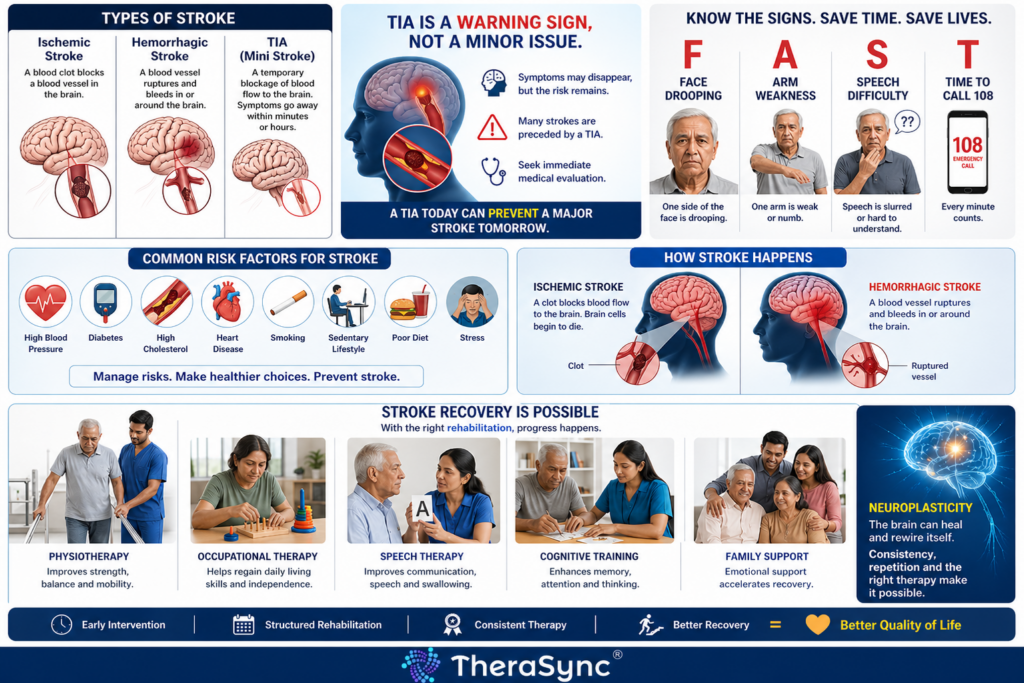
There are three clinically important categories:
1. Ischemic Stroke
An Ischemic stroke is the most common type of stroke, accounting for approximately 80–85% of all cases. It occurs when a blood vessel supplying the brain becomes blocked, leading to reduced blood flow (ischemia) and deprivation of oxygen and nutrients to brain tissue.
Because brain cells begin to suffer irreversible injury within minutes of interrupted blood flow, ischemic stroke is a time-critical medical emergency. Early recognition and rapid treatment are essential to restore circulation, limit brain damage, and improve functional recovery outcomes.
2. Hemorrhagic Stroke
A Hemorrhagic stroke occurs when a blood vessel in the brain ruptures, leading to bleeding within or around the brain. It accounts for approximately 10–15% of all strokes, but is often associated with higher severity and mortality.
Common causes include chronic high blood pressure (hypertension), aneurysms, arteriovenous malformations (AVMs), and head injury. The bleeding not only disrupts normal blood flow but also increases pressure within the skull, leading to further brain injury.
Hemorrhagic stroke is a life-threatening medical emergency. Immediate treatment focuses on controlling the bleeding, reducing intracranial pressure, and preventing further damage to brain tissue. Early intervention is critical to improving survival and functional recovery.
3. Transient Ischemic Attack (TIA) — “Mini Stroke”
A temporary blockage of blood flow to the brain.
- Symptoms may last a few minutes to hours
- Often resolve completely
- No permanent damage is visible in many cases
However, it’s worth noting that some research suggests that even TIAs, despite their transient nature, can sometimes cause subtle, detectable brain injury on advanced imaging, though not typically leading to persistent neurological deficits.
But this is critical:
A TIA is not harmless. It is a warning.
Many major strokes are preceded by a TIA — often within days or weeks.
Why TIA Matters More Than People Think
Because symptoms resolve, many patients ignore a TIA.
That is a mistake.
A TIA indicates:
- Underlying vascular disease
- High risk of a full stroke
- A narrow window for prevention
Common warning signs (same as stroke):
- Sudden weakness on one side
- Slurred speech
- Facial drooping
- Temporary vision loss
A TIA is the body giving you a second chance — before permanent damage occurs.
Why Do Strokes Happen?
Stroke is rarely accidental. It is typically the outcome of underlying risk factors:
1. Chronic Conditions
- Hypertension (most significant contributor)
- Diabetes
- High cholesterol
- Heart disease (e.g., atrial fibrillation)
2. Lifestyle Factors
- Sedentary behavior
- Smoking
- Poor diet
- Chronic stress
3. Age & Genetics
- Risk increases with age
- Family history plays a role
What Happens After a Stroke?
Stroke does not just affect movement.
It can impact:
- Motor control
- Speech and communication
- Cognition
- Swallowing and daily function
The brain’s ability to adapt — neuroplasticity — is what makes recovery possible.
But neuroplasticity is not automatic.
It must be activated through structured, repeated, meaningful activity.
The Biggest Misconception About Stroke Recovery
Many believe recovery is:
- Time-dependent
- Or limited to the first few months
In reality, recovery depends on:
- Intensity
- Specificity
- Consistency
- Coordination
Patients plateau not because recovery stops —
but because structure and coordination stop.
What High-Quality Stroke Rehabilitation Actually Looks Like
Effective stroke rehabilitation is not session-based.
It is program-based.
1. Structured Assessment
Baseline measures, functional goals, standardized tools.
2. Multidisciplinary Care
- Physiotherapy (PT): Mobility and gait
- Occupational Therapy (OT): Function and independence
- Speech Therapy (SLP): Communication, cognition, swallowing
3. Coordinated Execution
One plan. One direction. No silos.
4. Real-World Integration
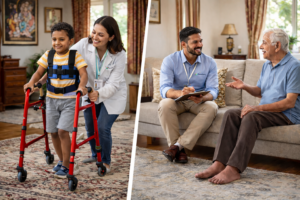
Recovery happens where life happens — at home and in daily routines.
5. Measurable Progress Tracking
Clear, consistent outcome visibility for families and doctors.
Why Most Stroke Rehab Falls Short
Despite good intentions, many patients experience:
- Fragmented care
- Lack of standardized protocols
- No measurable outcomes
- Limited carryover into daily life
This leads to slower, incomplete recovery.
A Better Way Forward: Structured, Coordinated Recovery
At TheraSync Neuro:
- Every patient is on a structured recovery pathway
- Every session is guided by clinical protocols
- Every month shows measurable progress
- Every therapist works as part of a coordinated team
Recovery is not about doing more therapy.
It’s about doing the right therapy — in the right sequence — with the right coordination.
Final Thought
Stroke changes life in an instant.
TIA warns you before it does.
What happens next determines the outcome.
With the right structure and coordination:
- Stroke recovery can be maximized
- And in some cases, stroke itself can be prevented
About TheraSync Neuro
Structured. Coordinated. Outcome-Driven Neurorehabilitation
Home-Based | In-Clinic | Virtual
Global neuro expertise. Personalized for your family.